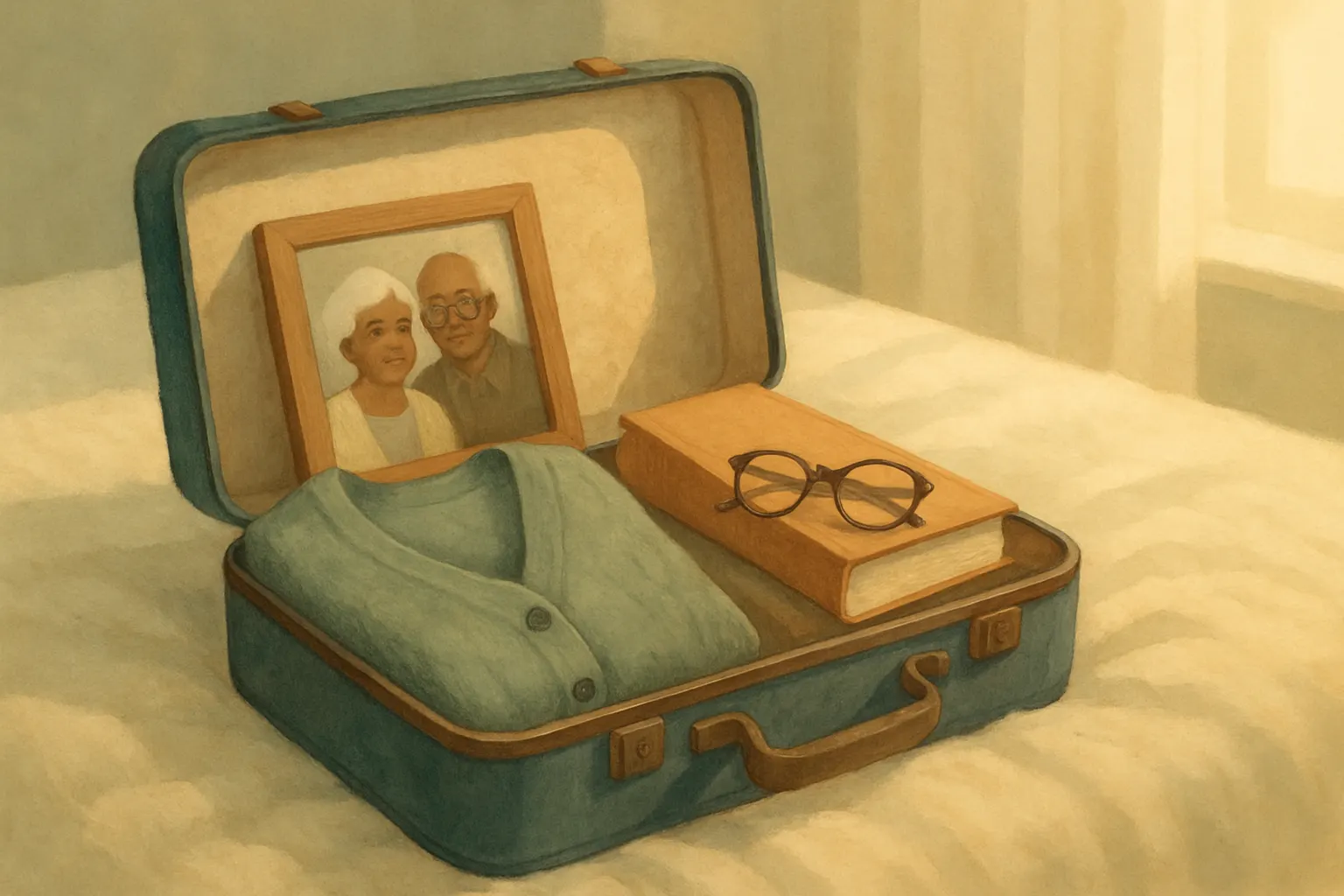
Clothing
- About a week's worth of comfortable, easy-on/easy-off clothes — nothing that only survives dry cleaning.
- Non-slip shoes or slippers with a firm back, not floppy scuffs — falls matter more than fashion here.
- A sweater or two; care settings are often cooler or warmer than home.
- Everything labeled with their name, in permanent marker or sewn-in labels.
Toiletries and personal care
- Their usual toothbrush, toothpaste, denture supplies, brush or comb, and preferred soap or lotion — familiar smells and routines comfort.
- An electric razor if they use one (check whether it's allowed).
- Glasses, hearing aids, and spare batteries — plus a labeled case for each.
Things that make a room feel like theirs
This is the part that matters emotionally. A few familiar things turn an institutional room into a personal one:
- A few framed family photos, or a small photo board.
- A favorite blanket, quilt, or pillow (label it).
- A wall calendar and a clock with large, easy-to-read numbers.
- A couple of beloved books, a hobby item, or a small piece of art — nothing irreplaceable.
- For someone with memory loss, familiar objects from years past can be especially grounding.
Practical and medical
- A current medication list (the facility will manage the medications themselves — don't bring loose pills unless asked).
- Insurance cards, ID, and copies of any advance directives or healthcare proxy paperwork.
- A list of doctors, pharmacies, and emergency contacts.
- A simple phone they can use, or a tablet for video calls, clearly labeled.
What to leave home
- Valuables and real jewelry — bring a sentimental piece only if you accept the risk of loss.
- Large amounts of cash.
- Irreplaceable heirlooms and original important documents (bring copies).
- Space-hungry furniture or anything the facility hasn't cleared — rooms are smaller than a house.
- Anything on the facility's not-allowed list (ask first).