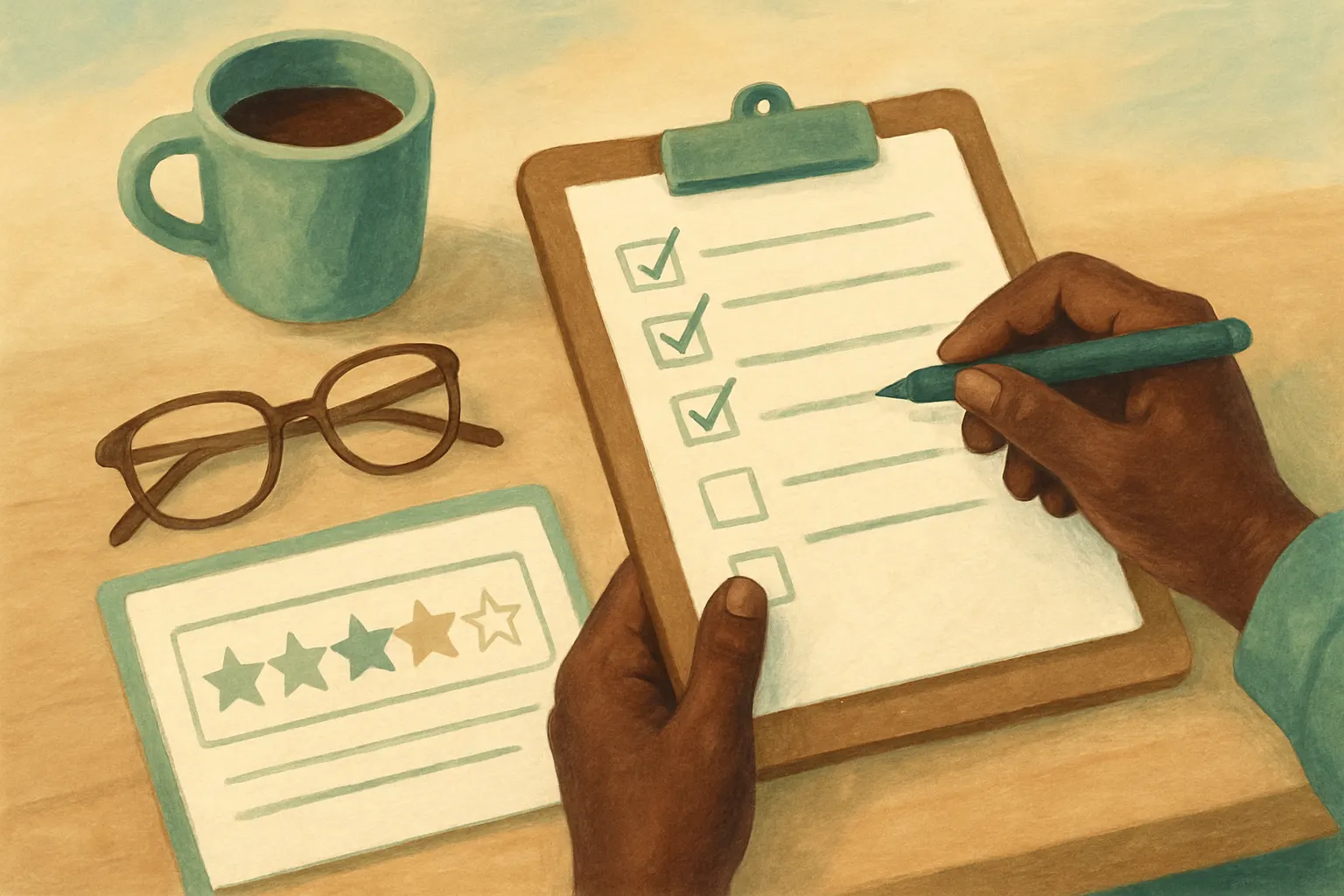
Where the stars come from
The overall rating is built by the government from three kinds of public data, collected for every certified nursing home in the country:
- Health inspections — trained state inspectors visit roughly once a year (plus extra visits when someone files a complaint), walk the building, review records, and write up everything that falls short of the rules.
- Staffing — how much time nurses and aides actually spend per resident per day, reported from payroll records.
- Quality measures — clinical outcomes tracked for every resident, like pressure sores, falls with injury, and how often residents end up back in the hospital.
Health inspections weigh the most. A home can’t buy its way to a better score, and no directory — including this one — can change it.
How to read the numbers
| Rating | How to think about it |
|---|---|
| 5 stars | Well above average on inspections, staffing, and outcomes. Still worth a visit — averages aren’t guarantees. |
| 4 stars | Above average. A solid shortlist candidate in most areas. |
| 3 stars | Average. Look at which component pulls it down — staffing issues feel different from paperwork findings. |
| 1–2 stars | Below average. Read the inspection detail before deciding; ask the administrator directly what happened and what changed. |
What the stars miss
- How it feels — warmth, smell, noise, whether staff greet residents by name.
- Fit — language, food, faith, culture, the activity calendar.
- Recency — ratings update on a data cycle, so a brand-new problem (or a real turnaround) can take months to show.
- Your specific need — a home can be strong overall and thin in the one specialty you need, like dialysis support or a secured memory unit.
Deficiencies and fines, in plain language
When an inspector finds a rule not being met, that’s a “deficiency” — and nearly every home has some. What matters is severity and pattern: was anyone harmed? Does the same problem show up year after year? Fines are money penalties for the more serious or repeated problems. On each facility page here, you’ll see the recent deficiency count and any fines, stated plainly.
Using ratings the smart way
- Sort with them, don’t decide with them — stars build the shortlist, visits make the choice.
- Compare the three components, not just the overall — a 3-star home with strong staffing may beat a 4-star one that’s thin on staff.
- Ask about what you read — “I saw the last inspection found X. What changed?” is a fair question, and good administrators answer it well.